Live projects for policymakers promise to be the most exciting component of the Policy in Action Program. For this edition of the program, fellows supported the work of the following policymakers:
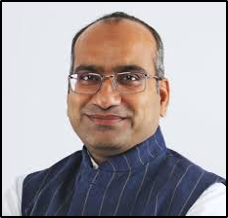
Sujeet Kumar is a Member of the Rajya Sabha representing Odisha, with his first term beginning in 2020 and a second consecutive term commencing in December 2024. He is associated with the Bharatiya Janata Party (BJP).
He holds a Bachelor of Engineering (BE) from Veer Surendra Sai University of Technology, a Bachelors of Law (LLB) from Sambalpur University, an MBA from Said Business School, Oxford University (where he received the inaugural Skoll Scholarship), and a Master in Public Administration (MPA) from Harvard Kennedy School, Harvard University. He currently heads the Committee on Petitions in the Rajya Sabha and has introduced key Private Members’ Bills, including legislation for legislative and expenditure accountability and India’s national Net Zero transition.
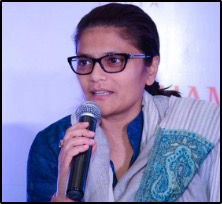
Sushmita Dev is a Member of Rajya Sabha from West Bengal, representing the All India Trinamool Congress (AITC) since 2024.
She holds a B.A. (Hons.) from Miranda House, University of Delhi, an LL.B. from Thames Valley University, London, and an LL.M. in Corporate and Commercial Laws from King’s College London. She currently serves on several Committees including the Committee on Water Resources and the Consultative Committee for the Ministry of Development of North Eastern Region.
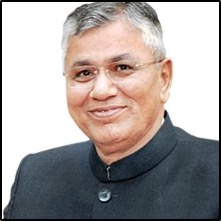
P.P. Chaudhury is a Member of Lok Sabha representing Pali in Rajasthan since 2014, with repeated electoral victories as a candidate of the Bharatiya Janata Party (BJP).
He holds undergraduate degrees in Science (B.Sc.) and Law (LL.B.) from Jai Narain Vyas University, Jodhpur. Before entering politics, he had a distinguished career as a senior advocate, arguing over 11,000 cases in the Rajasthan High Court and the Supreme Court of India, especially those related to constitutional law, land acquisition, and farmers’ grievances. He was inducted as Union Minister of State for Law and Justice and for Corporate Affairs in Prime Minister Modi’s first cabinet, and currently chairs the Joint Parliamentary Committee constituted to examine the “One Nation, One Election” Bill in addition to serving on others including the Committee on Finance and the Business Advisory Committee.
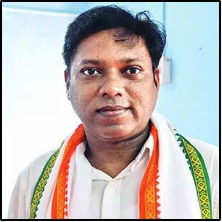
Sasikanth Senthil is a Member of Lok Sabha representing Tiruvallur in Tamil Nadu. He was elected in 2024 as a candidate of the Indian National Congress.
He earned his Bachelor of Engineering (Electronics and Electrical) from the National Institute of Technology, Tiruchirappalli. He secured All India Rank 9 in the UPSC Civil Services Exam in 2009 and served as Assistant Commissioner and later Deputy Commissioner in Karnataka until his resignation in 2019. In Parliament, he has served on the Committee on Welfare of Scheduled Castes and Scheduled Tribes and the Committee on Social Justice & Empowerment.
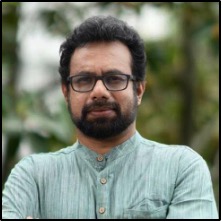
Dr. John Brittas is a Member of the Rajya Sabha representing Kerala since June 2021 as part of the Communist Party of India (Marxist).
He completed his B.A. and M.A. in Political Science, an LL.B. from Kerala Law Academy College, and later earned his M.Phil. and Ph.D. from Jawaharlal Nehru University, New Delhi. In Parliament, he has participated in more than 800 debates and introduced 16 Private Member’s Bills. He serves on committees related to Electronics & Information Technology, External Affairs, Transport, Tourism & Culture, and Public Undertakings.

Praniti Shinde is a Member of the Lok Sabha, representing the Solapur constituency in Maharashtra since 2024. She is a member of the Indian National Congress and serves as the Working President of the Maharashtra Pradesh Congress Committee.
She completed her school education at Bombay Scottish School, Mahim, and graduated from St. Xavier’s College, Mumbai. She also holds a law degree from Government Law College, Mumbai. She is known for her social work through her NGO JaiJui and has actively participated in political movements such as the Bharat Jodo Yatra.
Before her election to Parliament, she served as a three-time MLA in the Maharashtra Assembly, from the Solapur City Central constituency. In Parliament, she serves on the Committee on External Affairs.
Live Projects
During the course of the program, teams of 4-6 fellows each are assigned to work on policy issues for the participating policymakers. You’ll find below a list of the specific issues that the teams worked on during this edition of the program.
- What are the major contributions of the Indian diaspora to the country’s economic and development priorities? How have remittances, philanthropy, private investment, and knowledge networks shaped both India’s global influence and domestic growth?
- How has India’s approach to engaging with its diaspora evolved through specific policies, legal frameworks, and linkage initiatives aligned with its economic and cultural priorities? What gaps or fragmentation challenges persist, particularly in relation to engagement with specific countries?
- Critically analyse how other countries with large global diasporas structure their diaspora engagement through dedicated institutions, legal frameworks, investment channels, or innovation networks. What role has technology played in enabling any of these engagements?
- Can technologies such as participatory digital platforms and AI-driven collaboration tools drive sustained engagement with the global diaspora, both by providing the required support and by encouraging collaborative learning? Consider exploring the potential of digital public infrastructures (such as interoperable payment systems and data exchanges) in enabling such engagement.
- Based on your analysis, propose an actionable policy roadmap detailing the institutional design, legal reforms, inter-ministerial coordination mechanisms etc., needed to build a sustainable and inclusive model for global Indian collaboration enabled by technology.
Home to some of India’s most resource-rich yet often socio-economically disadvantaged regions, tribal areas pose a complex governance challenge. Balancing development with rights, autonomy, and ecological sustainability has remained a persistent policy concern, despite decades of targeted interventions. Against this backdrop:
- Examine how the Tribal Sub-Plan (TSP) has evolved since the 1970s — its original objectives, governance structure, fiscal design, and beneficiaries — and how its scope has shifted with changing developmental and political priorities.
- Using data and stakeholder consultations, assess key governance challenges in TSP areas and their impact on outcomes in health, education, livelihoods, land rights, and natural resource management.
- Evaluate how the Fifth and Sixth Schedules, the Panchayats (Extension to Scheduled Areas) Act, 1996 (PESA), and the Forest Rights Act, 2006 (FRA) have shaped self-governance and convergence in tribal regions, and identify gaps in institutional design, administrative capacity, finance flows, and community participation.
- Drawing on comparative insights from Indian states and international experiences, propose institutional reforms, participatory models, and monitoring mechanisms to strengthen tribal governance, accountability, and developmental outcomes under the TSP.
- Drawing on publicly available data, estimate the scale and distribution of drinking water scarcity across India. How does scarcity vary across regions, and what are the different socio-economic, geographical, and institutional factors that contribute to it? What are the implications for health, education, livelihoods, and gendered time burdens?
- How has the Jal Jeevan Mission attempted to address the issues? To what extent has the creation of the Ministry of Jal Shakti affected convergence across other central and state interventions, such as the National Rural Drinking Water Programme, AMRUT, and departments responsible for water supply and management, and quality monitoring?
- How can other schemes and institutional mandates, such as the Atal Bhujal Yojana, MGNREGS, Village Water and Sanitation Committees, and Swachh Bharat Mission, be aligned more effectively to support integrated water security planning at district and state levels?
- Suggest practical policy measures to improve how funds are used, ensure quality and access, make coverage more equitable, and sustain water sources over time.
- How has heritage historically figured within India’s broader tourism strategy? How have national and state policies addressed conservation, tourism integration, and adaptive reuse across different types of heritage assets - protected, unprotected, private, and community-managed?
- Rajasthan hosts several heritage sites in the country, including nine UNESCO World Heritage sites. What are the existing mechanisms for the maintenance of heritage properties under the Archeological Survey of India (ASI), state government, and private ownership, and how effective are they?
- How effective have existing initiatives, such as the “Adopt a Heritage” scheme, and state-level policies, such as the Rajasthan Monuments and Archaeological Sites and Antiquities (RMASA) Act, been in enabling private-sector participation, and aligning conservation goals with the development of tourism?
- Drawing on domestic and international case studies, propose recommendations for institutional reforms, financing models, governance structures, and participatory approaches to help the government strengthen heritage conservation and unlock tourism potential in Rajasthan.
- How are agricultural practices in Rajasthan changing in response to arid conditions, climate variability and groundwater decline? What emerging trends are visible in agricultural diversification - particularly the rise of horticulture, nurseries, and fruit cultivation in desert and semi-arid regions?
- How is Rajasthan’s water-use landscape evolving, and how effective have micro-irrigation systems (such as drip and sprinkler irrigation) been in improving productivity and conserving scarce water resources? What is the potential for new canal and irrigation projects that could help utilise water from the Indus Waters Treaty allocations currently in abeyance, and what would be their likely impact on the state’s agricultural landscape?
- What central and state-level policies, schemes, subsidies, and insurance programmes shape farming and water-use decisions in Rajasthan? To what extent have these interventions supported sustainable agriculture and efficient water use, and where do gaps exist in implementation, coordination, or farmer participation?
- What lessons can Rajasthan draw from arid and semi-arid regions within India or globally? What roles do technological interventions and community-led practices play in enhancing resilience? Based on your research, identify targeted policy reforms to support sustainable agriculture, and optimal water utilisation in Rajasthan.
- Map the issue of coastal flooding in Tamil Nadu, examining the physical, ecological and human drivers of flooding. Which communities face a disproportionate impact and what specific problems do they report in housing, livelihoods, health, and displacement?
- Assess the legal mandates, institutional roles, and accountability mechanisms under disaster management and coastal regulation frameworks. Examine whether agencies have issued and implemented actionable plans with clear targets and enforcement tools.
- Evaluate the institutional arrangements, programmes, and nature-based measures adopted by the Government of Tamil Nadu. Through data and stakeholder consultations, identify strengths and gaps in coordination, financing, and last-mile delivery.
- Which regional or global models for coastal flood resilience are most transferable to Tamil Nadu’s shoreline contexts? What roles can community-based organisations play in risk mapping, preparedness, and maintenance?
- Based on research and stakeholder inputs, provide actionable recommendations for Tamil Nadu to strengthen flood resilience in shoreline communities.
- What does data from 2015–2024 reveal about enrolment, retention and dropout rates of SC children in Tamil Nadu as compared to other social groups? How do these trends vary across gender, rural–urban locations, and different levels of schooling? How does this compare with national level data?
- What structural, socio-economic, institutional, and cultural factors (such as household income, parental education, digital access and spatial segregation) contribute most significantly to educational inequality among SC children?
- What central and state-level policies and initiatives have been implemented to address access gaps for SC children in Tamil Nadu? To what extent have these interventions been effective in improving access, and what implementation bottlenecks continue to constrain their impact?
- How have other Indian states with comparable socio-economic contexts or international counterparts designed and implemented policies to reduce educational inequality among historically marginalised groups?
- Based on your research and stakeholder engagement, recommend targeted programmatic reforms and policy-level innovations to enhance inclusivity and ensure equitable educational outcomes in Tamil Nadu.
- What constitutional provisions and institutional arrangements define how powers are shared between the Union and the States in (a) fiscal matters, (b) legislative matters, and (c) administrative functions?
- Given the above, examine how India’s federal structure has evolved over time, assessing whether Centre–State relations have strengthened or weakened. Engage with constitutional and legal scholars, civil society actors, and researchers tracking social and infrastructure spending to provide a nuanced analysis of structural shifts. Specifically identify recent political, fiscal, and administrative challenges in Centre–State relations. Analyse what these challenges reveal about current strains in India’s federal system and their implications for legislative and executive functioning.
- Assess issues in fiscal federalism, governance, and legal authority across states. Examine issues in tax devolution, fund transfers for welfare schemes, treatment of cesses and surcharges and constitutional or administrative barriers (e.g., Article 254, assent requirements, fiscal dependence) affecting states’ ability to legislate and implement policies.
- Study federal constructs from other countries to identify models for effective fund allocation, legislative autonomy, and administrative decentralisation that could be adapted to India.
- Evaluate the political feasibility and administrative feasibility of your proposed reforms. Engage with stakeholders to identify likely pathways for implementing your recommendations.
- Provide an overview of air pollution in Maharashtra, situating it within the national context and highlighting trends over the past few decades, using publicly available air quality datasets to assess variations across major cities, industrial clusters, and smaller non-attainment towns. Specifically analyse pollution’s health impacts, such as respiratory and cardiovascular diseases, and economic costs, including healthcare expenditures and productivity losses.
- What has Maharashtra’s experience been with the National Clean Air Programme (NCAP) since its launch in 2019? How much of the improvements, if any, can be attributed to NCAP interventions versus external or temporary factors, such as lockdown-induced changes in activity, meteorological variations, and so on?
- Map the major stakeholders and the political-economic factors that shape the implementation of NCAP in Maharashtra. What gaps remain in terms of state capacity and accountability, and how do these impact policy effectiveness?
- Are there learnings that can be drawn from similar socio-economic contexts globally, or best practices from regions within India? Based on your research, identify institutional reforms, incentive structures, and regulatory frameworks that could strengthen Maharashtra’s trajectory under NCAP.
- What does data reveal about the scale and nature of women’s participation in Maharashtra’s informal labour markets across various sectors, including the gig economy? How do patterns vary across caste, religion, migration status, and region (urban–rural)? How does this compare with national-level data? What structural, socio-economic, and gender-specific factors shape women’s access to formal and informal work opportunities in the state?
- Are there any central and state-level laws, schemes, or regulations that govern informal labour in Maharashtra? To what extent have these policies improved job security, workplace safety, social protection, and bargaining power for women informal workers, and where do gaps persist? What roles do local governments and community-based organisations play in improving working conditions for women in the informal economy?
- In the context of India’s limited government resources and high unemployment, what lessons can Maharashtra draw from other Indian states and global examples of labour policies to improve economic security and worker protections for women in the informal sector? How can technology be effectively leveraged to enhance these protections?
- Based on stakeholder consultations and desk research, suggest targeted reforms in labour governance that are needed to enhance dignity, income stability, and economic opportunities for women informal workers in Maharashtra.
Class profile
Educational background